


Introduction
In today’s fast-paced world, stress has become a normal part of life, but managing it effectively is essential for maintaining emotional balance and overall well-being. Many people struggle with pressure from work, studies, relationships, and financial responsibilities, which can negatively affect both mental and physical health. This is where practical mental health tips for stress management become extremely important. These strategies help individuals stay calm, focused, and emotionally stable even during challenging situations.
Understanding how stress works and learning how to control it can significantly improve your daily life. When stress is ignored, it can lead to anxiety, sleep problems, and reduced productivity. However, with the right techniques, anyone can build resilience and develop a healthier mindset. In this article, you will learn simple, effective, and science-backed methods that can help you manage stress in a practical way. These approaches are suitable for beginners as well as intermediate readers who want to improve their mental strength and emotional control.
By the end of this guide, you will have a complete understanding of practical mental health tips for stress management and how to apply them in your everyday life to feel more balanced and in control.
What is Practical Mental Health Tips for Stress Management?
Practical mental health tips for stress management refer to real-life strategies and habits that help individuals control stress and improve emotional well-being. These tips are not theoretical ideas but actionable steps that can be applied in daily routines. They include breathing exercises, time management techniques, physical activity, mindfulness practices, and cognitive behavioral strategies.
The main goal of practical mental health tips for stress management is to reduce the negative impact of stress on the mind and body. Stress is a natural response to pressure, but when it becomes chronic, it can harm concentration, mood, and overall health. These practical methods help regulate emotions and bring a sense of calmness and control.
Unlike complex psychological treatments, these tips are simple and accessible to everyone. They can be practiced at home, at work, or even during travel. The effectiveness of practical mental health tips for stress management lies in consistency and regular practice, making them a powerful tool for long-term mental wellness.
Why is Practical Mental Health Tips for Stress Management Important?

Managing stress is essential because it directly affects how we think, feel, and behave. Without proper stress management, individuals may experience burnout, anxiety, and reduced performance in daily tasks. Practical mental health tips for stress management play a crucial role in preventing these issues and promoting emotional stability.
One of the biggest reasons this topic is important is that modern life is full of pressure and distractions. People often ignore their mental health while focusing only on responsibilities. Over time, this imbalance can lead to serious psychological and physical problems. By applying practical mental health tips for stress management, individuals can maintain a healthy balance between work and personal life.
Another important factor is productivity. When stress is controlled, the mind becomes clearer, leading to better decision-making and improved focus. Additionally, these techniques support better relationships, as emotionally stable individuals communicate more effectively and handle conflicts calmly.
Overall, practical mental health tips for stress management are essential for living a healthier, happier, and more productive life in today’s demanding environment.
Detailed Step-by-Step Guide
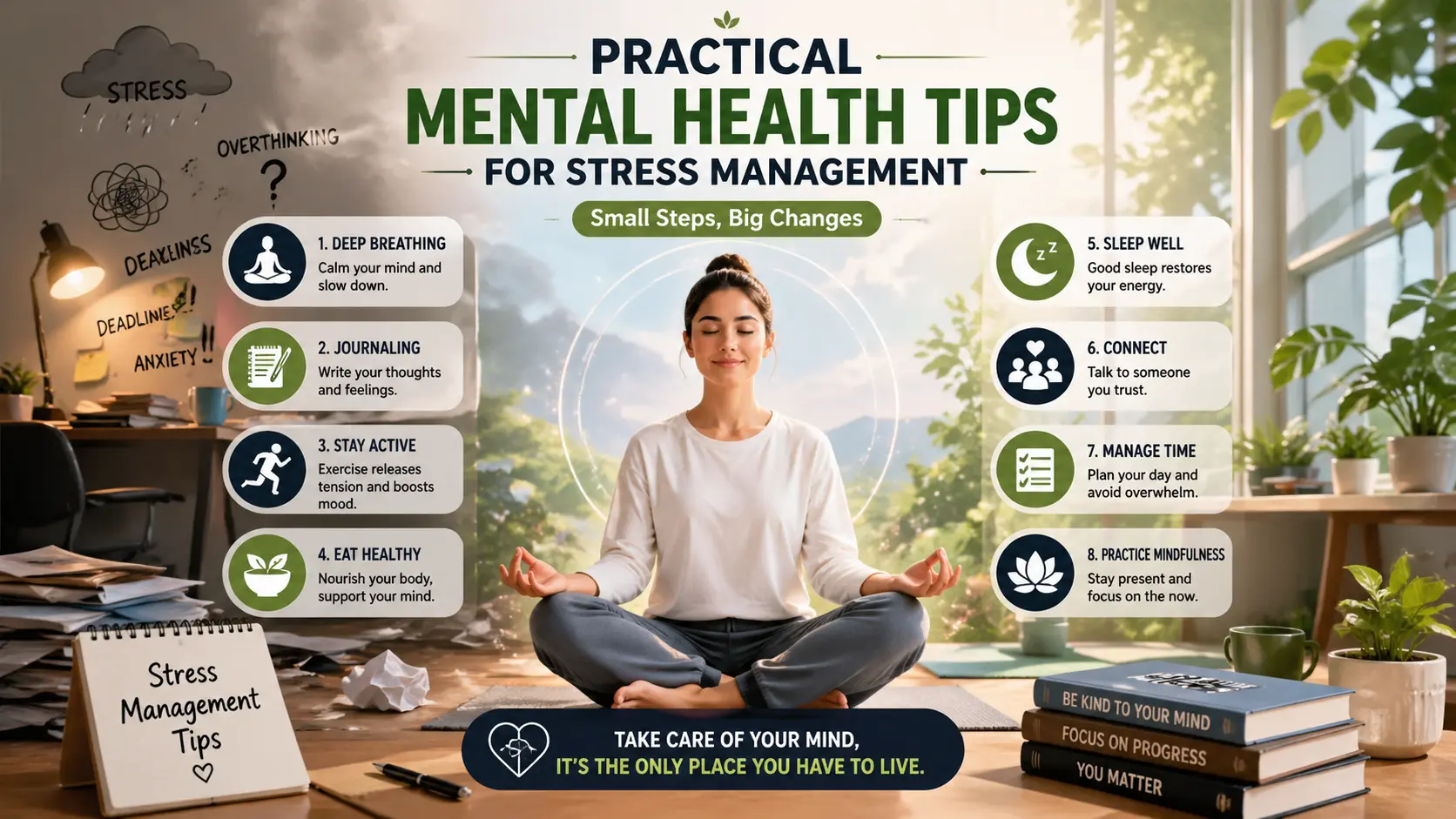
Identify Your Stress Triggers
The first step in managing stress is understanding what causes it. These triggers can be work pressure, personal issues, or lifestyle habits. By identifying them, you can take control and reduce unnecessary stress.
Practice Deep Breathing Techniques
Deep breathing is one of the most effective practical mental health tips for stress management. It helps calm the nervous system and reduces anxiety instantly. Simple breathing exercises can be done anywhere and at any time.
Build a Daily Routine
A structured routine reduces confusion and improves productivity. Planning your day helps you stay organized and reduces last-minute stress.
Exercise Regularly
Physical activity releases endorphins, which are natural mood boosters. Even a short daily walk can significantly improve mental health.
Improve Sleep Quality
Good sleep is essential for stress management. Lack of sleep increases irritability and reduces focus. Maintaining a fixed sleep schedule helps improve emotional balance.
Practice Mindfulness
Mindfulness involves staying present in the moment. It reduces overthinking and helps control negative thoughts.
Manage Time Effectively
Poor time management often leads to unnecessary stress. Prioritizing tasks and setting realistic goals can make a huge difference.
Benefits of Practical Mental Health Tips for Stress Management
- Reduces anxiety and emotional pressure
- Improves focus and concentration
- Enhances productivity in daily tasks
- Promotes better sleep quality
- Strengthens emotional resilience
- Improves relationships and communication
- Supports physical health by reducing stress-related issues
- Encourages a positive mindset
Disadvantages / Risks
- Requires consistency and discipline
- Results may take time to appear
- Some techniques may not work for everyone
- Over-reliance on one method can limit effectiveness
- Misapplication of techniques may cause frustration
Common Mistakes to Avoid
Many people try practical mental health tips for stress management but fail due to common mistakes. One major mistake is inconsistency. Practicing techniques only occasionally does not produce long-term results. Another mistake is ignoring physical health while focusing only on mental exercises. Both mind and body must work together for effective stress management.
People also tend to expect immediate results, which leads to disappointment. Stress management is a gradual process. Additionally, avoiding stress instead of managing it is another common error. Stress cannot always be eliminated, but it can be controlled effectively.
Lastly, relying only on one method is not enough. A combination of techniques works best for long-term mental well-being.
FAQs
1. What are practical mental health tips for stress management?
They are simple, real-life strategies like breathing exercises, mindfulness, and time management that help reduce stress and improve emotional well-being.
2. How quickly do these techniques work?
Some methods like deep breathing provide instant relief, while others like lifestyle changes take time to show full results.
3. Can stress be completely eliminated?
No, stress is a natural part of life. However, it can be effectively managed using practical mental health tips for stress management.
4. Do I need professional help for stress management?
In mild cases, self-help techniques are enough. However, severe stress or anxiety may require professional guidance.
5. Are these tips suitable for students and professionals?
Yes, these techniques are designed for everyone, including students, employees, and business individuals.
6. Can exercise really reduce stress?
Yes, regular physical activity releases chemicals in the brain that naturally reduce stress and improve mood.
Expert Tips & Bonus Points
Experts recommend combining multiple techniques for better results. For example, pairing exercise with mindfulness can significantly improve emotional stability. Another important tip is to maintain a gratitude journal, which helps shift focus from negative to positive thoughts.
Limiting screen time is also highly effective, as excessive digital exposure increases mental fatigue. In addition, staying socially connected helps reduce feelings of isolation and improves emotional support.
Consistency is the key to success. Even small daily efforts can lead to long-term improvements in mental health. Practical mental health tips for stress management work best when they become part of your lifestyle rather than temporary solutions.
Conclusion
Stress is an unavoidable part of life, but how we manage it determines our overall well-being. By applying practical mental health tips for stress management, individuals can significantly improve their emotional balance, productivity, and quality of life. These techniques are simple, effective, and accessible to everyone, making them ideal for beginners as well as experienced individuals.
The key to success lies in consistency and self-awareness. When you understand your stress triggers and apply the right coping strategies, you gain better control over your thoughts and emotions. Over time, this leads to a healthier mindset and a more positive outlook on life.
Incorporating practical mental health tips for stress management into your daily routine can transform the way you handle pressure and challenges. Instead of feeling overwhelmed, you will develop resilience and confidence. Ultimately, managing stress is not about eliminating it completely but learning how to respond to it in a healthy and balanced way.
